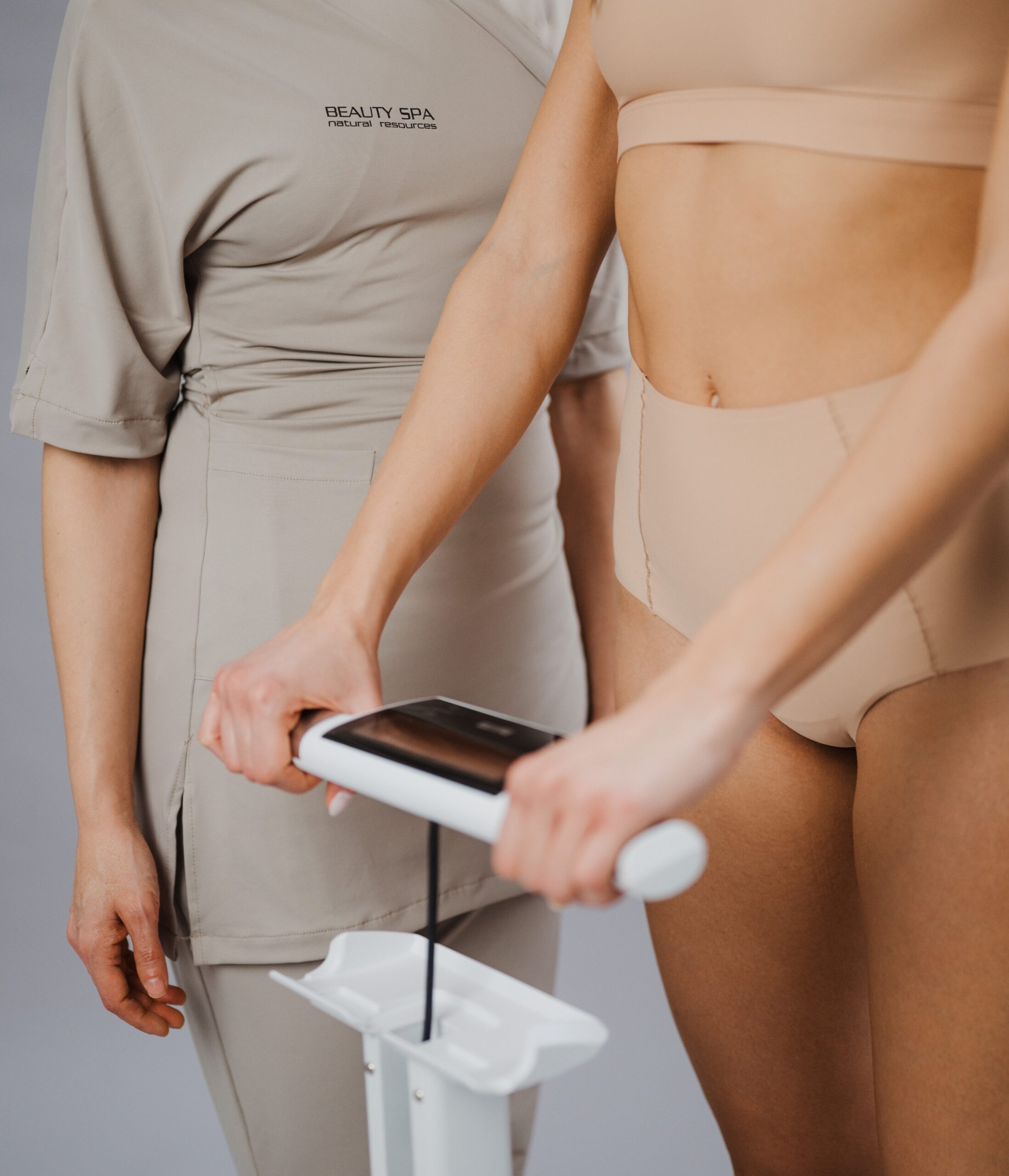
Body Assessment
Instrumental Analysis
Body assessment is the first true point of connection between the beauty therapist and the client
It is a moment dedicated to listening, observation and gathering information, allowing the beauty therapist to understand the body as a whole, beyond the individual aesthetic concern.
Through consultation, measurements and tissue analysis, the beauty therapist builds an initial picture that becomes the reference point for the entire treatment journey. This is a fundamental step in defining realistic, personalized strategies that can be monitored over time.
For a complete and structured assessment, the ideal tool is the Beauty Spa Client Assessment Form, specifically designed to collect all the information required for a systematic functional evaluation of the body and to develop a truly targeted treatment programme.
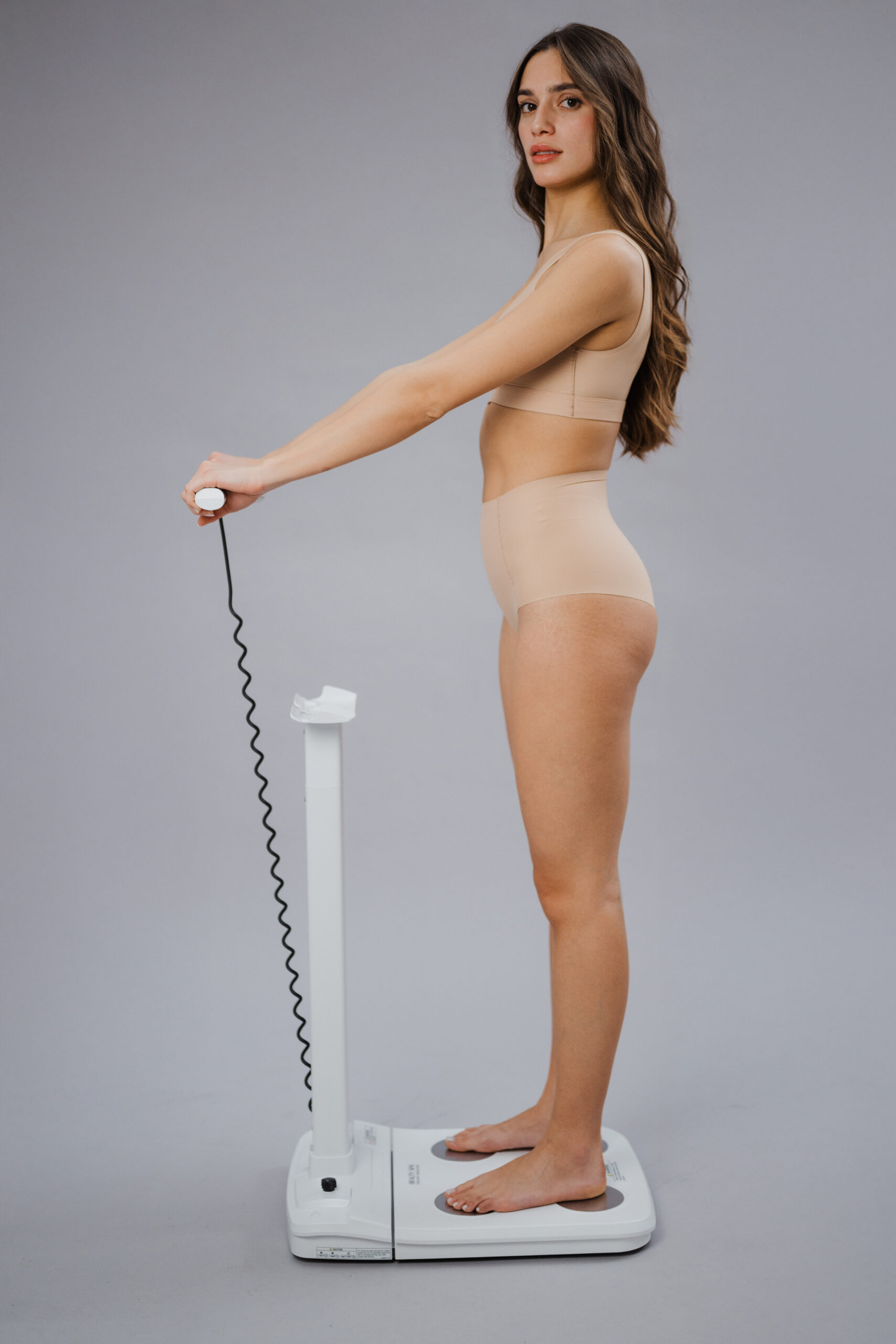
Bioelectrical Impedance Analysis (B.I.A.)
The B.I.A. is a method used to assess body composition beyond body weight alone.
By passing a very low electrical current through the body, it is possible to estimate its bioelectrical impedance — the resistance that different tissues offer to the flow of the current. As water, fat, minerals and muscle tissue have different electrical properties, the Rebody Analyst bioimpedance device provides information about overall body composition. In particular, it can estimate lean mass, fat mass, total body water and other body compartments, providing a more detailed understanding of what contributes to an individual’s overall body weight. One particularly significant parameter is the phase angle*, an indicator associated with cellular integrity and metabolic function, which can provide useful information when assessing the body’s response throughout an aesthetic treatment programme.
*Phase angle is a value related to the integrity and vitality of cells. A higher phase angle is generally associated with more intact cell membranes and efficient cellular exchange, whereas a lower value may indicate reduced cellular functionality. Within professional aesthetics, this parameter can help provide a broader understanding of how the body may respond to treatment and whether an initial phase focused on stimulation and rebalancing may be appropriate.
Measurements for Monitoring Progress
Anthropometric measurements are not intended as an aesthetic judgement in themselves. Instead, they provide an objective tool for monitoring progress throughout the treatment course.
Measurements are taken of the arms, waist, hips, thighs, knees and ankles and recorded at three key stages: at the beginning, midway through and at the end of the course.
This makes it possible to track changes over time and provide objective evidence of the results achieved.
Visual and Tactile Tissue Assessment
Direct observation and palpation allow the beauty therapist to assess tissue quality and its functional condition.
The assessment considers the presence of oedema and the quality of circulation, as well as tissue firmness or laxity, muscle tone and the distribution of localised adiposity.
It also includes an evaluation of skin tone uniformity, the presence of stretch marks and the type of cellulite observed. The possible presence of visceral fat is also taken into consideration as part of the overall assessment.
The Value of B.I.A. within the Aesthetic Treatment Course
Within professional aesthetics, Bioelectrical Impedance Analysis is a valuable strategic tool, helping to make the assessment more objective and easier for the client to understand. It promotes greater awareness, supports motivation and enables the beauty therapist to develop a more targeted approach.
The Rebody Analyst provides information on the amount and distribution of body fat, the quality of lean mass as an indicator associated with metabolic function, the presence of visceral fat, and the distribution of body water — important parameters for interpreting conditions such as fluid retention and tissue congestion.
Basal metabolic rate provides useful information about energy expenditure and helps establish realistic expectations regarding the treatment course, while the phase angle can support the beauty therapist in determining the most appropriate stages at which to incorporate Ozone treatments. Finally, the analysis of body symmetry and proportion, combined with postural assessment, provides an even more comprehensive understanding of the body.
Body assessment is the foundation on which every Beauty Spa treatment course is built. It provides the initial reference point needed to define realistic goals, monitor changes over time and guide the client through a personalised, effective and informed journey that respects the individuality of their body.